
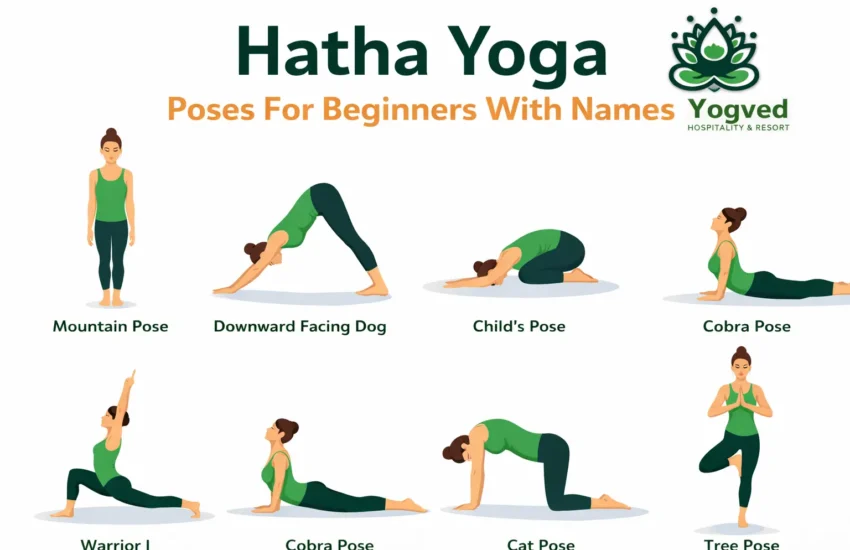
If you are new to yoga and wondering where to start, Hatha Yoga is a great way to build a regular yoga practice. It focuses on basic yoga poses, breathing techniques, and relaxation, making it suitable for beginners. Learning different Hatha Yoga poses names and yoga positions can help you understand each posture and practice with confidence. In this guide, explore popular yoga poses with their English and Sanskrit names, benefits, and step-by-step instructions.
What Is Hatha Yoga?
Before you start with Hatha Yoga poses, you need to understand the basics. Traditional yoga focuses on basic physical poses, breathing techniques, and relaxation. It moves at a slow pace, which makes it perfect for beginners. It is different from fast yoga styles, as hatha yoga gives you time to understand each pose clearly. Hatha Yoga is a traditional style of yoga that combines physical postures (asanas), breathing techniques (pranayama), and relaxation. It generally follows a slower pace, allowing practitioners to understand each movement and focus on proper alignment. For beginners, Hatha Yoga offers an opportunity to learn basic yoga positions, improve body awareness and develop a consistent practice. It includes different standing, seated, balancing and relaxation poses that can be adapted to individual comfort levels.
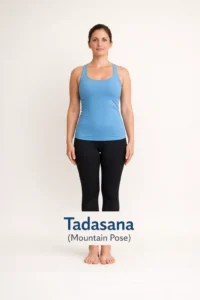
Tadasana (Mountain Pose)
It is also known as the mountain pose. The pose can help you improve posture, build body awareness, and strengthen your legs. This is usually the starting pose in hatha yoga.
How to Do It:
- Stand straight with your feet together.
- Keep your arms by your sides.
- Stretch your spine tall.
- Breathe slowly.
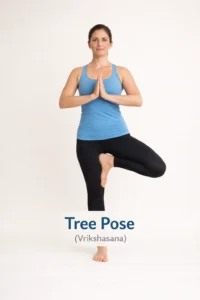
Vrikshasana (Tree Pose)
It helps you improve balance, strengthens your legs, and also improves concentration. If you feel unstable, you can stand near a wall for support.
How to Do It:
- Stand on one leg.
- Place the other foot on your inner thigh or calf.
- Join your palms above your head.
- Balance and breathe.
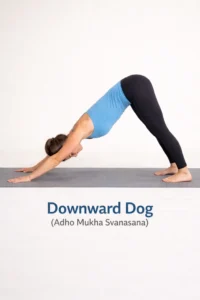
Adho Mukha Svanasana (Downward-Facing Dog)
It is known as adho mukha savasana. It stretches your hamstrings and strengthens your arms. The best part is that the pose helps you improve your blood circulation. You just need to bend your knees slightly if your legs feel tight.
How to Do It:
- Start on hands and knees.
- Lift your hips to form an upside-down V shape.
- Keep hands and feet pressing into the mat.
Bhujangasana (Cobra Pose)
It is known as cobra pose. One of the best parts about the poses is that they strengthen your back muscles and improve posture. You don’t need to strain your lower back; you just need to lift as much as you are comfortable.
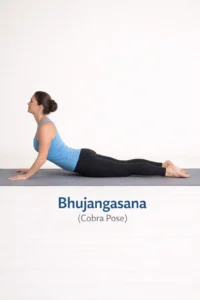
How to Do It:
- Lie on your stomach with your legs extended.
- Place your palms under your shoulders.
- Keep your elbows close to your body.
- Gently lift your chest while keeping your pelvis on the mat.
- Hold comfortably and breathe slowly.
10 Basic Hatha Yoga Poses Names for Beginners
1. Balasana (Child’s Pose)
Balasana is a gentle resting posture that helps relax the body and release tension in the back and shoulders.
How to Do It:
- Kneel on your yoga mat.
- Bring your big toes together and sit back on your heels.
- Slowly bend forward and rest your forehead on the mat.
- Extend your arms forward or keep them beside your body.
- Breathe slowly and comfortably.
2. Virabhadrasana I (Warrior I Pose)
Warrior I is a standing yoga posture that helps develop strength, balance and stability.
How to Do It:
- Stand straight and step one foot back.
- Bend your front knee while keeping it aligned with your ankle.
- Turn your back foot slightly outward.
- Raise both arms overhead.
- Hold the position while breathing comfortably.
3. Setu Bandhasana (Bridge Pose)
Bridge Pose is a gentle backbend that strengthens the back and leg muscles while opening the chest.
How to Do It:
- Lie on your back with your knees bent.
- Keep your feet flat on the mat.
- Place your arms beside your body.
- Slowly lift your hips while keeping your shoulders on the mat.
- Hold comfortably and breathe.
4. Paschimottanasana (Seated Forward Bend)
This seated yoga posture stretches the back of the body, including the hamstrings and spine.
How to Do It:
- Sit with your legs extended forward.
- Keep your spine straight.
- Slowly bend forward from your hips.
- Reach towards your feet without forcing the stretch.
- Breathe naturally.
5. Trikonasana (Triangle Pose)
Triangle Pose is a standing posture that helps stretch the legs, hips and sides of the body.
How to Do It:
- Stand with your feet comfortably apart.
- Turn one foot outward.
- Extend your arms at shoulder height.
- Reach towards the extended leg and lower one hand towards your shin.
- Raise the opposite arm and look comfortably ahead or upward.
6. Savasana (Corpse Pose)
Savasana is a relaxation posture generally practiced at the end of a yoga session. It allows the body and mind to rest.
How to Do It:
- Lie comfortably on your back.
- Keep your arms relaxed beside your body.
- Allow your feet to fall naturally outward.
- Close your eyes and breathe normally.
- Relax your body without forcing your breathing.
Yoga Positions Names with Pictures
Learning yoga positions names with pictures helps beginners identify different postures and understand how to practice them. Each yoga pose has a Sanskrit name and a commonly used English name. Here are some popular yoga positions to include in your daily practice:
- Tadasana – Mountain Pose
- Vrikshasana – Tree Pose
- Adho Mukha Svanasana – Downward-Facing Dog
- Bhujangasana – Cobra Pose
- Balasana – Child’s Pose
- Virabhadrasana I – Warrior I Pose
- Setu Bandhasana – Bridge Pose
- Paschimottanasana – Seated Forward Bend
- Trikonasana – Triangle Pose
- Savasana – Corpse Pose
Benefits of Hatha Yoga Poses
Regular practice of Hatha Yoga can support overall physical and mental well-being. Some commonly experienced benefits include:
- Improved Flexibility: Gentle stretching helps improve flexibility and mobility.
- Better Posture: Standing and seated poses encourage body awareness and alignment.
- Stress Management: Slow movements and mindful breathing can help promote relaxation.
- Improved Balance: Balancing poses help develop stability and coordination.
- Better Body Awareness: Practicing different yoga positions helps you understand your body’s movements and limitations.
- Relaxation: Resting poses such as Savasana encourage physical and mental relaxation.
The benefits may vary depending on your practice, consistency and individual health.
Tips for Practicing Hatha Yoga Poses for Beginners
If you are new to Hatha Yoga, start with simple poses and focus on learning the correct posture rather than increasing the duration. Keep these tips in mind:
- Practice on a comfortable, non-slip yoga mat.
- Wear comfortable clothing that allows easy movement.
- Preferably practice 2–3 hours after a heavy meal.
- Warm up your body before starting the poses.
- Breathe naturally and avoid holding your breath unnecessarily.
- Do not force your body into difficult positions.
- Practice regularly and gradually improve your routine.
- Seek guidance from a qualified yoga instructor if you are unsure about a posture.
Beginners should modify poses according to their comfort and avoid movements that cause pain.
Conclusion
Hatha Yoga is a beginner-friendly way to explore different yoga poses, improve body awareness and develop a regular wellness routine. By learning common yoga poses names and positions, you can understand each posture and practice at your own pace. Start with simple asanas, focus on comfortable movements and stay consistent with your practice. With proper guidance and patience, Hatha Yoga can become a valuable part of your daily wellness journey.
Also Read
-
Best Rishikesh Yoga Retreat For UK Citizens
-
Rishikesh Yoga Retreat For Beginners | Start Your Journey With Yogved
